
Blacksmith Master Endgame Guide: Master Workers, Siege Machines, and Ducats
Learn how the Blacksmith Master endgame works in 1.0, covering Master Workers, Siege Machines, Set Items, Mythic tiers, Ducat Minting, and scaling tips.
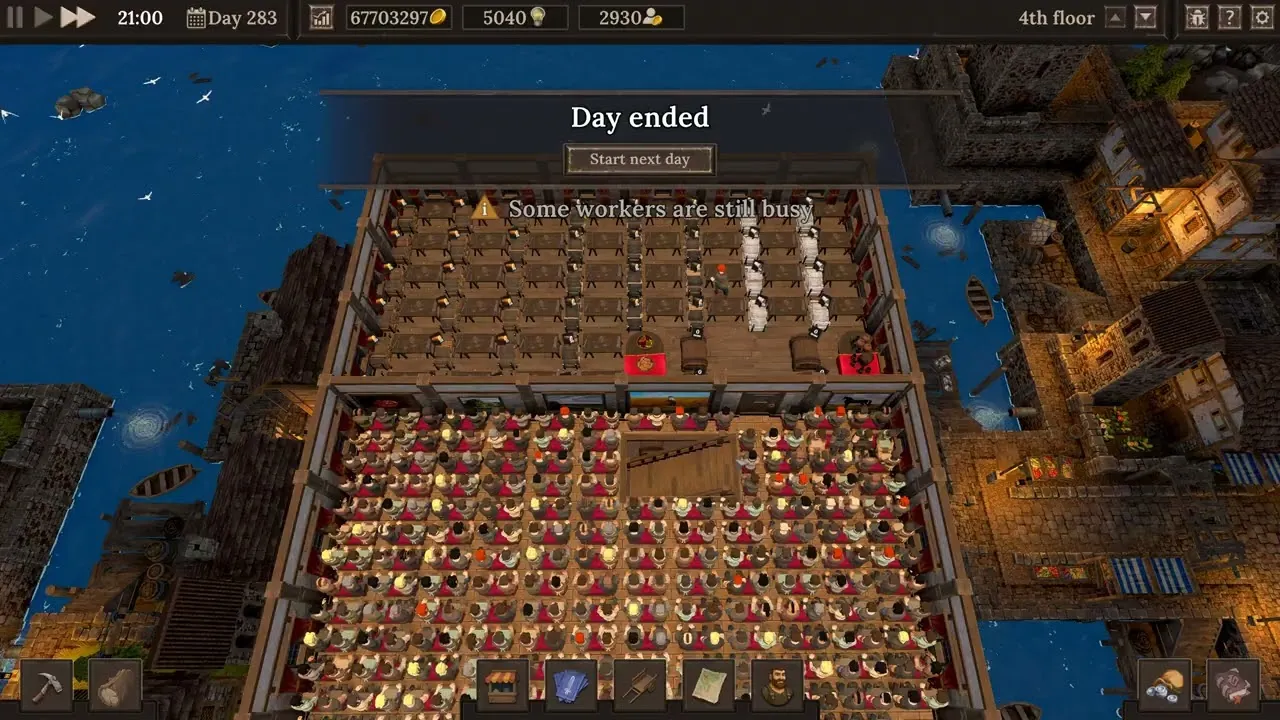
Reaching late-game production once meant stacking gold on familiar display racks, but the full 1.0 launch turned the Blacksmith Master endgame into an interconnected loop of elite specialists, massive multi-part contracts, and high-tier equipment. Knowing how these late-game systems depend on one another matters because poor material pacing, clogged floors, or neglected worker morale can stall a thriving multi-story smithy overnight. This guide breaks down every confirmed Blacksmith Master endgame pillar—from Master Workers and Siege Machines to Ducat Minting, Scholar research, and workflow optimization—using official developer notes from the Blacksmith Master 1.0 release announcement on Steam alongside verified player experience.
How Version 1.0 Defines the Blacksmith Master Endgame
Solo developer Luka (Untitled Studio) and publisher Hooded Horse launched Blacksmith Master version 1.0 on November 19, 2026, graduating the medieval management sim out of Early Access with full save-file compatibility, according to the official Steam 1.0 release post. The game is officially available for Windows, macOS, and Linux on Steam and DRM-free on GOG, alongside Epic Games Store and Xbox on PC.
Version 1.0 was built to unify earlier mid- and late-game updates into a cohesive Blacksmith Master endgame progression path. Alongside earlier milestones like the flexible Mastery Tree rework (where completing one active crafting milestone unlocks any connected node instead of paying fixed shield currency costs), version 1.0 introduces six Master Workers, five Siege Machines, 12 Set Item collections, Common-to-Mythic Item Tiers, Random Events, free-angle NPC pathfinding, customer-only doors, and Ultra 6x speed, as detailed in the Blacksmith Master 1.0 preview announcement.
All Six Master Workers and Their Endgame Unlocks
Master Workers sit at the center of the Blacksmith Master endgame because each specialist permanently unlocks a late-game mechanic or high-capacity workshop upgrade. You can only hire one Master Worker of each type, making every slot a major milestone for a fully built smithy.
| Master Worker | Confirmed 1.0 Unlock / Ability | Primary Endgame Role |
|---|---|---|
| Master Blacksmith | Unlocks special merchant orders for Siege Machines | Opens the main 1.0 contract loop and Set Item blueprints |
| Master Assistant | Unlocks Tier 3 smelters | Scales ingot output for large multi-floor forges |
| Master Scholar | Unlocks the 5th upgrade level for all blueprints | Pushes finished goods to maximum retail value |
| Master Miner | Can find gems while mining | Generates supplemental income alongside ore extraction |
| Master Lumberjack | Unlocks 80-slot and 150-slot woodpile storage | Prevents wood starvation during high-volume orders |
| Master Cashier | Prevents customers from losing patience at the register | Protects shop revenue during peak foot-traffic spikes |
In practice, infrastructure specialists pair directly with production specialists. Securing Tier 3 smelters through the Master Assistant and 80-slot or 150-slot woodpiles through the Master Lumberjack helps your supply chain survive the massive raw-material drain of Siege Machines before you hire the Master Blacksmith. Meanwhile, the Master Cashier removes checkout-queue stress once decorations and diverse racks push daily customer attraction into the hundreds. Exact gold hiring costs and Mastery Tree prerequisites for each Master Worker are not published in the official 1.0 preview notes.

Blacksmith Master 20260322 Endgame (Update 13) — bben
Siege Machines, Set Items, and Mythic Item Tiers
Once you hire the Master Blacksmith, the core Blacksmith Master endgame loop expands beyond standard store sales and daily merchant carts into multi-stage engineering projects.
- Five Siege Machines: Special merchant orders task your workshop with building five different siege engines, each requiring over 100 individual pieces to complete.
- Twelve Set Item Collections: Finishing Siege Machine contracts awards mystery blueprints for 12 new sets containing three items each, adding 36 craftable set items to your catalog.
- Common-to-Mythic Item Tiers: Version 1.0 organizes items from Common up to Mythic across Mastery Tree progression. Higher-tier items command much steeper selling prices, yet they demand high-tier materials that require careful margin management.
To maximize profit from newly unlocked set blueprints and Mythic gear, you must maintain a dedicated Scholar wing. Following the Scholar and Design Table overhaul in Update #8, Scholars generate Design Points independently of Blacksmiths, gain productivity from six design-space upgrades (such as lights, plants, chalkboards, and bookshelves), and activate a collaboration bonus whenever two design tables sit adjacent.
| Blueprint Upgrade Step | Confirmed Design Point Cost | Unlock Source / Notes |
|---|---|---|
| Common to Uncommon | 100 Design Points | Standard Scholar design table |
| Uncommon to Rare | 400 Design Points | 4x cost scaling per tier |
| Rare to Epic | 1,600 Design Points | 4x cost scaling per tier |
| Epic to Legendary | 6,400 Design Points | 4x cost scaling per tier |
| 5th Upgrade Level | Not specified in 1.0 preview | Requires hiring the Master Scholar |
Because official 1.0 notes do not list the individual recipes or names for all five Siege Machines and 36 Set Items, expect to inspect each mystery blueprint’s material breakdown before assigning racks. Stacking too many high-tier steel or silver blueprints simultaneously can starve your warehouse faster than your mines can recover.
Ducat Minting, Custom Pricing, and Difficulty Tuning
Gold alone stops being your only strategic currency in the Blacksmith Master endgame. Introduced in Update #10, royal Coin Minting lets your workshop press copper, silver, or gold Ducats onto dedicated racks and spend them on permanent upgrades for mines, forests, trade routes, and operating cost reductions.
| Minting Machine Level | Ingot Input | Ducat Output | Yield Efficiency |
|---|---|---|---|
| Level 1 | 1 small ingot | 1 ducat | Baseline small-ingot return |
| Level 2 | 3 small ingots | 4 ducats | Higher small-ingot efficiency |
| Level 3 | 3 medium ingots | 9 ducats | 3 ducats per medium ingot |
| Level 4 | 5 medium ingots | 16 ducats | 3.2 ducats per medium ingot |
| Level 5 | 3 large ingots | 25 ducats | Peak late-game output per cycle |
Two additional late-game systems shape your margins alongside Ducat upgrades:
- Custom Item Prices and Elasticity: Added in Update #11, custom pricing (including bulk edits) follows a 2x demand rule. Raising an item’s price by 10% lowers customer demand by 20%, whereas discounting an item boosts demand by 2x. You can use modest markups to slow down iron-hungry items without dismantling display racks.
- Difficulty Modes and Random Events: You can switch between Relaxed, Normal, and Hard anytime in settings. While Relaxed allows workers to eventually max every stat, Normal and Hard cap maximum worker levels lower and tighten economy parameters—forcing intentional skill specialization. Version 1.0 also adds Random Events with positive or negative effects, such as temporary drops in customer traffic or reduced hiring costs, rewarding workshops that hold liquid gold reserves.
Multi-Floor Logistics, Resource Balance, and Staff Morale
Scaling into a multi-million-gold Blacksmith Master endgame workshop requires solving supply bottlenecks rather than simply adding more anvils. Both official workshop tools and documented player experience highlight the same core rule: balance material consumption across every raw resource.
According to player experience from high-profit Early Access runs, the most common late-game collapse comes from overloading iron ore. A single Royal Sword requires two steel ingots (four iron ore), and feeding clay trade routes such as 120 Wide Cooking Pans for 160 clay consumes 240 iron ore on its own. Community reports recommend diversifying shop displays and merchant offers across oak wood, pinewood, copper, bronze, clay, and silver—and disabling active trade routes whenever warehouse stockpiles dip.
In mines and forests, player experience strongly favors splitting roles manually instead of letting every worker do everything. Because uncollected ore left on the ground at midnight is lost rather than stored, pairing dedicated miners (leveled in mining and stamina) with dedicated haulers (leveled in walk speed and stamina) prevents daily waste. Combine that staffing split with the Stronger Miners upgrade (carrying two ores per trip) and the compact 3x3 rest areas to maximize output.
| Common Endgame Bottleneck | Official Tool or Player-Tested Fix |
|---|---|
| Rapid iron ore or clay depletion | Diversify racks into wood and copper items (player experience), toggle trade routes, or raise custom prices to curb demand |
| Smelting bottlenecks during Siege orders | Hire the Master Assistant for Tier 3 smelters, use 2- or 4-smith furnaces, and set source/destination toggles on ingot pallets |
| Uncollected ore vanishing at midnight | Separate miners from fast-walking haulers (player experience) and unlock Stronger Miners for 2-ore trips |
| Customer traffic blocking staff routes | Place 1.0 customer-only doors, separate production across upper floors, and close the shop manually to restock racks |
| Staff quitting or losing positive traits | Maintain all five Worker Happiness factors: hours, salary bonus, job security, multiple seating choices, and food and drinks |
Inside the smithy, take advantage of quality-of-life tools added across late Early Access and 1.0. Compact 1x1 ingot storages with source/destination toggles keep raw smelting separated from forge floors, while simultaneous crate access prevents worker queues. Use the Staff menu list view and multi-edit checkboxes from Update #15 to audit traits and craft priorities at scale, and avoid frequent firing so job security stays high—happy workers level faster and suppress negative traits, while severely unhappy staff can resign outright.
Blacksmith Master Endgame FAQ
What is the main goal of the Blacksmith Master endgame in version 1.0?
The Blacksmith Master endgame centers on hiring all six Master Workers, fulfilling the five 100+ piece Siege Machine orders to unlock all 12 Set Item collections (36 craftable items), upgrading blueprints through Mythic and Level 5 quality tiers, and investing Ducats into permanent mine, forest, and trade upgrades.
Do Early Access saves work with the 1.0 endgame content?
Yes. Developer Luka confirmed in the official 1.0 release announcement that all Early Access saves carry over cleanly into version 1.0 without restarting. Older saves created before Update #11 default to Relaxed difficulty, though you can switch to Normal or Hard anytime in the settings menu.
Can you hire multiple Master Workers of the same type?
No. Official 1.0 documentation confirms a strict limit of one Master Worker per role across the six types: Master Blacksmith, Master Assistant, Master Scholar, Master Miner, Master Lumberjack, and Master Cashier.
Does the Blacksmith Master endgame include multiplayer or co-op orders?
No. According to the official Steam store listing, Blacksmith Master is strictly a single-player management game, with no multiplayer or co-op modes announced or listed.
Related guides: Tips and Tricks · How to Make Money Fast · Coin Minting Guide · All Guides
Related Articles
community
Blacksmith Master Discord: Official Invite, Dev Feedback & 1.0 Hub
Join the official Blacksmith Master Discord for 1.0 layout tips, bug reports read by solo dev Luka, and verified links to the wiki and Reddit.
community
Blacksmith Master Mods Guide (1.0): Nexus Tools & Vanilla Options
Check Blacksmith Master mods status in 1.0, popular Nexus Mods QoL tools, BepInEx update risks, and built-in vanilla features worth using.
community
Blacksmith Master Reddit: Official Subreddit & 1.0 Community Builds
Find the official Blacksmith Master Reddit hub at r/Blacksmith_Master, explore 1.0 build discussions, and use official wiki and Steam guides.
Was this helpful?
Thanks for the feedback!