
Blacksmith Master Best Traits: Role Priorities, Happiness, and 1.0 Guide
Learn the Blacksmith Master best traits for every worker role in 1.0, how Worker Happiness toggles traits, and how to level staff on Hard difficulty.
Hiring the wrong employee in a busy medieval smithy quietly drains your treasury every single day, which is why knowing the Blacksmith Master best traits is essential for scaling a profitable workshop. With version 1.0 launching on November 19, 2026, staff efficiency now interacts directly with Worker Happiness rules, Normal and Hard level caps, and six unique Master Workers. Whether you are optimizing your first iron forge or assembling massive siege machine orders, prioritizing the Blacksmith Master best traits keeps daily wages under control while maximizing output across every floor.
How Worker Traits Work in Blacksmith Master 1.0
According to the official Blacksmith Master Beginner’s Guide on Steam, every standard employee arrives with two traits, an upfront hiring cost, a daily salary, and role-specific specialization stats that grow through experience. Because daily wages rise whenever a worker levels up, investing experience into staff whose traits clash with their assigned job hurts your long-term profit margins.
Official Steam patch notes and the Beginner’s Guide do not publish an exhaustive catalog of every individual trait name or exact percentage modifier. Instead, evaluating the Blacksmith Master best traits depends on understanding the three worker tiers available in version 1.0 and matching each hire’s trait categories to their station.
| Worker Tier | Trait & Perk Structure | How to Acquire | Key Limit or Mechanics |
|---|---|---|---|
| Standard Workers | 2 traits (typically mixed positive and negative) | Standard Staff hiring pool | Negative trait can be disabled at high happiness; positive trait disabled if severely unhappy |
| Elite (Purple) Workers | 2 positive traits and 0 negative traits | Hiring pool rerolls or special Merchant Offer rewards | Update #06 prevents duplicate unique elite traits from reappearing once hired |
| Master Workers (1.0) | Role-exclusive workshop unlocks | Unlocked during version 1.0 progression | Strict limit of 1 Master Worker for each of the 6 worker roles |
Elite (purple) hires stand out because they roll two positive traits with zero negative drawbacks. Under Update #06, certain unique elite traits no longer reappear in the hiring pool once you already employ a worker holding them. If you hire a specialized elite worker who adds a basement floor, Update #05 notes that you can only lay them off after clearing all items from that basement.
Blacksmith Master Best Traits by Worker Role
Across community reports, one priority rises above everything else: Movement Speed. Because every step between a storage bin, furnace, anvil, or bench produces zero items, movement speed acts as a universal S-tier trait for every role. Even though version 1.0 replaced rigid 45-degree movement with smooth free-angle pathfinding, faster travel still cuts idle time across multi-floor layouts.
For Blacksmiths, pay close attention to version history if you watch older Early Access guides. Update #08 removed blueprint design from Blacksmiths and gave them Walking Speed alongside Metalworking and Carpentry. Player experience shows that metalworking and carpentry crafting times fall sharply as skill levels rise, making a huge difference when forging late-game Silver and Gold gear or 100-piece Siege Machines. Community reports recommend pairing Movement Speed with Metalworking/Heating or Carpentry traits, then locking each smith’s crafting preference (such as Metal Items or Most Expensive First) to match.
Scholars, introduced in Update #08, run the design tables using Walking Speed, Design Speed, and Collaboration Bonus. Because upgrading blueprint rarities scales by 4x per tier—100 Design Points for Uncommon, 400 for Rare, 1,600 for Epic, and 6,400 for Legendary—community reports rank Design Speed and Collaboration as top Scholar traits. Place two design tables side by side to trigger collaboration bonuses and pack the room with all six design space upgrades (such as lights, plants, chalkboards, and bookshelves) to amplify output in a tight footprint.
| Worker Role | Top Trait Focus (Community Reports) | Core Specialization Stats | Best Task & Workshop Pairing |
|---|---|---|---|
| Blacksmith | Movement Speed, Metalworking/Heating, or Carpentry | Metalworking, Carpentry, Walking Speed | Lock crafting preference to metal or wood; pair opposite furnaces and anvils |
| Scholar | Design Speed, Collaboration, Movement Speed | Walking Speed, Design Speed, Collaboration Bonus | Place two adjacent design tables with all 6 design space decor upgrades |
| Assistant (Hauling & Restock) | Movement Speed, Carry-friendly utility | Speed and Carry Capacity | Set to Restock resources or merchant delivery; keep bins near the warehouse |
| Assistant (Smelting) | Movement Speed | Speed (only handles 1 ingot per cycle) | Assign to dedicated metal type/size with source and destination storage toggles |
| Cashier | Checkout efficiency and Movement Speed | Purchase chance and customer wait tolerance | Enable waiting indicators in Settings; add counters before lines back up |
| Miner & Lumberjack | Movement Speed and balanced gathering traits | All gathering and hauling stats | Pair with Stronger Miners (2 ores per trip) and compact 3x3 rest areas |
Assistants benefit from splitting duties cleanly based on player experience. Hauling assistants who move stock to merchants or restock bins need both speed and carry capacity, while smelting assistants only process one ingot at a time, meaning movement and task speed matter far more than extra carry capacity. Update #06 merged wood, ore, and ingot hauling into a single Restock resources duty with source/destination storage toggles, while Update #13 improved assistant logic so they prioritize chests holding more items.
For Cashiers, the official Beginner’s Guide confirms their specialization stats boost customer purchase probability and patience in checkout queues. Meanwhile, Miners and Lumberjacks benefit from well-rounded traits since every skill contributes to ore and timber throughput—especially after unlocking Update #06’s Stronger Miners upgrade (two ores per trip) and placing Update #10’s compact 3x3 rest areas. Focusing on role alignment is the most reliable way to apply the Blacksmith Master best traits across your entire supply chain.

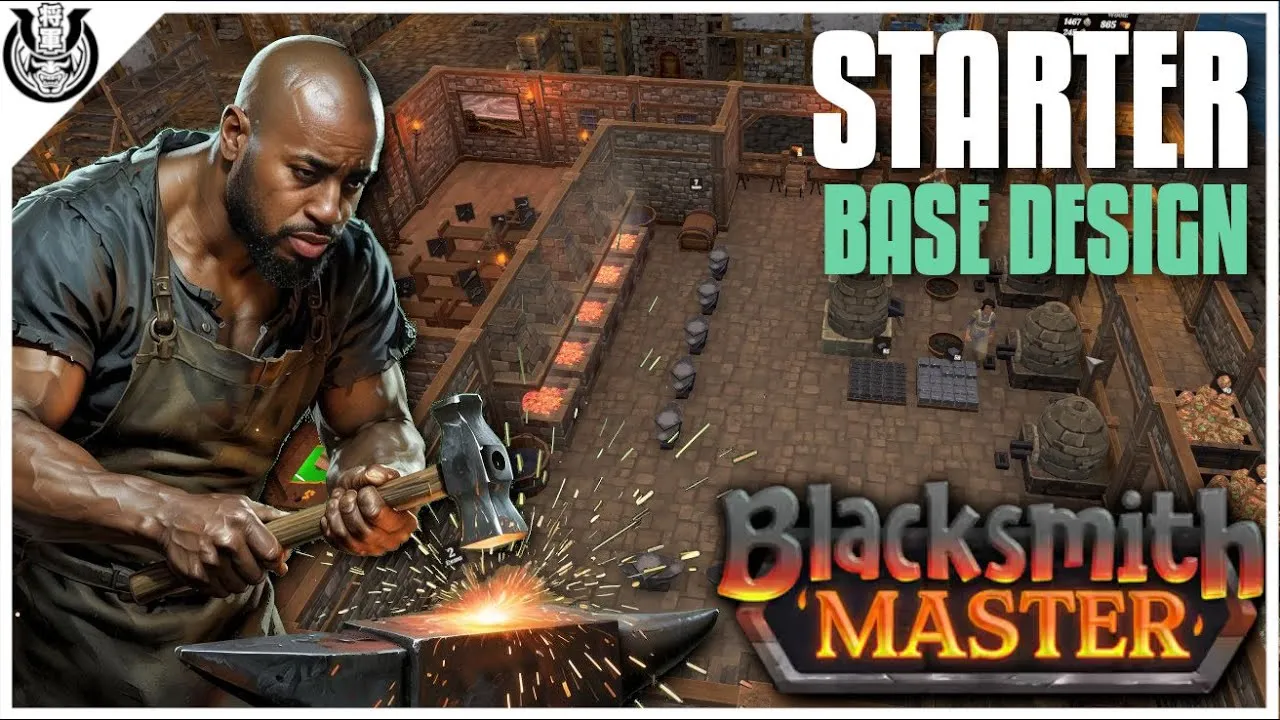
UBEZERK Plays Blacksmith Master – Top Starter Base Design & Progression Plan (Part 1) — UBEZERK
General game footage used as fallback media. This is not a keyword-specific tutorial or device benchmark; use the cited references for factual claims.
How Worker Happiness Disables Negative Traits (Update #13)
Even the Blacksmith Master best traits lose their value if you neglect morale. In Update #13: Staff Management Improvements, developer Luka introduced a five-factor Worker Happiness system that directly activates or disables traits based on working conditions.
When employees stay happy and motivated, they gain experience faster and their negative trait is completely disabled. Conversely, unhappy staff risk quitting on their own, and severely unhappy workers have their positive trait disabled. In practical terms, a well-treated standard worker with one strong positive trait and one bad drawback performs much closer to an elite hire.
| Happiness Factor | How It Affects Staff | Management Trade-Off |
|---|---|---|
| Working hours | Longer shifts lower happiness; shorter shifts relieve fatigue | Shorter hours reduce daily revenue on the 7 am–12 am schedule |
| Salary bonus | Paying above base wages directly boosts morale | Increases daily payroll alongside rising level-up salaries |
| Job security | Firing workers too frequently lowers remaining staff happiness | Slows down aggressive hiring-and-firing cycles when hunting traits |
| Seating options | Upgraded benches and seats make rest breaks more comfortable | Requires floor space and upfront construction gold |
| Food and drinks | Providing meals and beverages makes shifts much more tolerable | Adds recurring daily operating costs |
Pay special attention to Job security when refreshing your roster. The Beginner’s Guide notes that replacing weak early hires with stronger, multi-trait staff eventually beats endlessly building extra accommodations, especially when you can afford rerolls. However, firing several workers back-to-back will tank morale across the smithy, so stagger layoffs carefully and keep an eye on version 1.0 Random Events that temporarily alter hiring costs.
Matching Traits to Difficulty Caps and Leveling Strategies
Difficulty choice fundamentally changes how strictly you must hunt for the Blacksmith Master best traits. Update #11 introduced three switchable difficulty presets—Relaxed, Normal, and Hard—that adjust economy values and cap maximum worker levels differently.
On Relaxed difficulty, workers can eventually max out every stat, giving you room to forgive imperfect rolls. On Normal and Hard, maximum worker levels are capped lower, meaning you cannot max every stat on one employee. Matching your manual or automatic level-up strategy directly to each worker’s traits becomes mandatory if you want fast late-game production.
| Setting or Leveling Mode | In-Game Behavior | Best Use Case for Trait Synergy |
|---|---|---|
| Relaxed Difficulty | Higher cap lets staff eventually max all stats | Flexible smithies and experimenting with hybrid workers |
| Normal & Hard Difficulty | Lower maximum worker level cap | Demands strict specialization matching traits to assigned roles |
| Auto: Highest Skill First | Automatically invests points in the worker’s top stat | Specialist blacksmiths (metal or wood) and smelting-only assistants |
| Auto: All Skills Equally | Distributes points evenly across every stat | Hauling assistants, miners, and lumberjacks who use all stats |
| Manual Assignment | Player assigns each level-up point individually | Hybrid smiths or tight stat budgets under Normal/Hard caps |
Managing dozens of workers used to require repetitive popup clicks, but Update #15: Staff menu overhaul introduced a list view and multi-edit checkboxes. Switch to list view whenever you audit traits, salaries, blacksmith crafting preferences, or assistant resource targets, then batch-update groups of specialists in seconds. Remember that Update #14 rebalanced salaries and mid-to-late-game pacing, so keeping your stockpiles full—even briefly dipping into the red, as player experience recommends—prevents paid staff from standing idle.
Master Workers in 1.0 vs. High-Trait Regular Staff
Alongside standard and elite trait rolls, version 1.0 introduced six unique Master Workers detailed in the official Blacksmith Master 1.0 Preview announcement. You can employ only one Master Worker per role, and rather than simply offering incremental speed bonuses, each unlocks an endgame mechanic that scales your whole workshop.
| Master Worker Role | Exclusive 1.0 Unlock | Workshop Synergy |
|---|---|---|
| Master Blacksmith | Unlocks 5 Siege Machine special merchant orders (100+ pieces each) | Rewards mystery blueprints for 12 Set Item collections (36 new items) |
| Master Assistant | Unlocks Tier 3 smelters | Eliminates late-game ingot bottlenecks alongside Update #06 multi-ingot smelters |
| Master Scholar | Unlocks the 5th upgrade level for all blueprints | Pushes high-demand goods toward Mythic-tier profitability |
| Master Miner | Can discover gems while mining ore | Expands raw resource value directly from your mines |
| Master Lumberjack | Unlocks 80-slot and 150-slot woodpile storage | Keeps carpentry benches supplied during large batch orders |
| Master Cashier | Prevents customers from ever losing patience at the register | Protects shop revenue during peak customer surges |
Version 1.0 launched on November 19, 2026 across Windows, macOS, and Linux via the Blacksmith Master Steam store page, with DRM-free availability on the Blacksmith Master GOG store page alongside Epic Games Store and Xbox on PC. All Early Access saves carry over seamlessly, so returning managers can pair their existing high-trait elites with these six Master Workers without restarting. Combining Master unlocks with the Blacksmith Master best traits on your supporting crew is the fastest path to mastering Mythic items and siege contracts.
Frequently Asked Questions About Blacksmith Master Best Traits
What are the Blacksmith Master best traits across every worker role?
Based on community reports, Movement Speed is the strongest universal trait because cutting walking time boosts output in every job. Beyond speed, pair Blacksmiths with Metalworking/Heating or Carpentry traits matching their crafting preference, prioritize Design Speed and Collaboration for Scholars, and favor pure speed on smelting assistants versus balanced stats on haulers, miners, and lumberjacks.
Can you remove or disable a worker’s negative trait in Blacksmith Master?
Yes. Under Update #13’s Worker Happiness system, keeping an employee happy and motivated automatically disables their negative trait and speeds up leveling. To maintain high morale, balance working hours, add comfortable seating, provide food and drinks, offer salary bonuses when needed, and avoid frequent firings that lower job security.
Should you fire early-game workers to reroll for better traits?
The official Steam Beginner’s Guide recommends eventually replacing weaker early hires with higher-potential, multi-trait staff instead of endlessly expanding accommodations. However, because Update #13 ties firing frequency to Job Security happiness, replace staff gradually rather than conducting mass layoffs all at once.
Did Blacksmith Master 1.0 change how traits and staff leveling work?
Version 1.0 preserves the core trait, Update #08 Scholar split, Update #11 Difficulty level caps, Update #13 Happiness trait-toggling, and Update #15 list-view Staff menu while adding six role-limited Master Workers, free-angle pathfinding, Common-to-Mythic item tiers, and Random Events. All Early Access saves remain compatible with 1.0, so you can apply these trait strategies to an existing smithy immediately.
Related guides: All 6 Master Workers · Elite Worker Guide · Max Level & Caps · Workers & Staff Hub
Related Articles
community
Blacksmith Master Discord: Official Invite, Dev Feedback & 1.0 Hub
Join the official Blacksmith Master Discord for 1.0 layout tips, bug reports read by solo dev Luka, and verified links to the wiki and Reddit.
community
Blacksmith Master Mods Guide (1.0): Nexus Tools & Vanilla Options
Check Blacksmith Master mods status in 1.0, popular Nexus Mods QoL tools, BepInEx update risks, and built-in vanilla features worth using.
community
Blacksmith Master Reddit: Official Subreddit & 1.0 Community Builds
Find the official Blacksmith Master Reddit hub at r/Blacksmith_Master, explore 1.0 build discussions, and use official wiki and Steam guides.
Was this helpful?
Thanks for the feedback!