
Blacksmith Master Master Workers Guide (1.0): All 6 Roles and Unlocks
Learn all 6 Blacksmith Master master workers added in 1.0, their unique unlocks, the one-per-type limit, and how they fit late-game shop management.
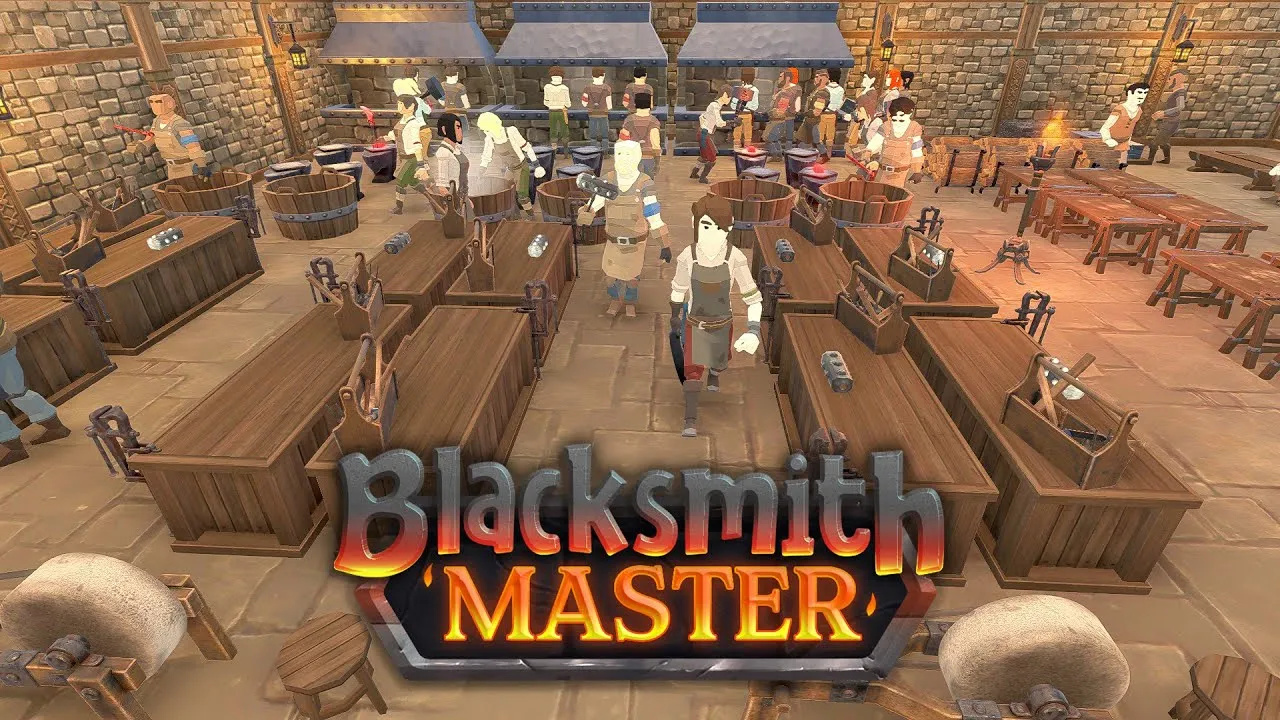
Hiring Blacksmith Master master workers is the single biggest turning point for expanding a medieval smithy into a true late-game production empire in version 1.0. Because each of these six specialist hires unlocks a permanent capability—ranging from massive siege machine contracts to Tier 3 smelters and infinite checkout patience—understanding Blacksmith Master master workers determines how smoothly your economy scales once ordinary upgrades run dry. Introduced with the full 1.0 launch on November 19, 2026, these capped specialists sit at the top of your workforce hierarchy and connect directly to set items, high-tier blueprints, and high-volume supply chains.
All 6 Blacksmith Master Master Workers and Their Unlocks
According to the official Blacksmith Master 1.0 preview announcement on Steam, version 1.0 adds six distinct specialist roles corresponding to every core job category in your smithy. A strict hiring cap applies across the board: you can employ only one Master Worker of each type at a time.
| Master Worker | Hiring Limit | Unique Feature Unlocked | Primary Production Area |
|---|---|---|---|
| Master Blacksmith | 1 | Unlocks special Siege Machine merchant orders | Forge crafting & Set Item blueprints |
| Master Assistant | 1 | Unlocks Tier 3 smelters for high-volume ingot production | Foundry smelting & workshop logistics |
| Master Scholar | 1 | Unlocks the 5th blueprint upgrade level for every recipe | Research & item value scaling |
| Master Miner | 1 | Can discover gems while mining ore | Underground extraction & bonus income |
| Master Lumberjack | 1 | Unlocks 80-slot and 150-slot woodpile storage options | Forestry & raw wood buffering |
| Master Cashier | 1 | Prevents customers from ever losing patience in checkout lines | Retail storefront & customer retention |
Rather than acting as minor stat bumps, Blacksmith Master master workers gate major endgame mechanics. Every single role addresses a specific bottleneck that emerges when a small starting workshop grows into a multi-floor operation with dozens—or, based on player experience, over a hundred—regular employees.
How Each Master Worker Reshapes Late-Game Progression
Each specialist connects to broader systems introduced in 1.0 or refined during Early Access. Understanding those downstream links helps you prepare workshop space, raw materials, and research output before hiring them.
| Master Worker | Connected 1.0 or Core System | Confirmed Mechanics & Figures |
|---|---|---|
| Master Blacksmith | Siege Machines & Set Items | 5 Siege Machines (100+ pieces each); rewards mystery blueprints for 12 sets (36 items total) |
| Master Assistant | Multi-Ingot Foundry Smelting | Adds Tier 3 smelters on top of existing 2- and 3-ingot smelter upgrades and source/destination pallets |
| Master Scholar | Blueprint Upgrades & Item Tiers | Extends upgrades past the 4-tier Design Point curve (100 / 400 / 1,600 / 6,400 DP) alongside Common-to-Mythic tiers |
| Master Miner | Mine Output & Ore Hauling | Generates bonus gems while mining; pairs with 2-ore carry upgrades and 3×3 mine rest areas |
| Master Lumberjack | Forestry & Wood Storage | Adds 80-slot and 150-slot woodpiles to store high-volume logs from 3×3 forest camp setups |
| Master Cashier | Storefront Traffic & Checkout | Eliminates register patience loss alongside 1.0 customer-only doors and free-angle NPC pathfinding |
Master Blacksmith: Siege Machines and Set Items
Hiring the Master Blacksmith opens special merchant orders for five Siege Machines. Each siege construction demands more than 100 individual crafted pieces, making these contracts major multi-smith undertakings rather than quick solo jobs. Completing them awards mystery blueprints for 12 new item sets containing three pieces each—36 craftable set items in total.
Player experience from late-game playthroughs indicates that Siege Machine contracts typically pay less raw gold up front than standard merchant orders, but they compensate with set blueprints and rare materials comparable to trade routes. Community reports also note that crafted set items—such as the Angelic and Necromancer sets—require dedicated set racks rather than normal weapon or shield racks, and that the Master Blacksmith personally crafts at remarkable speed, hammering iron into a sword in roughly a second.
Master Assistant and Master Lumberjack: Fixing Supply Bottlenecks
As your smithy expands across multiple floors, metal and wood logistics quickly become your tightest choke points. The Master Assistant unlocks Tier 3 smelters to keep ingot reserves flowing for large forge teams. Meanwhile, the Master Lumberjack unlocks 80-slot and 150-slot woodpiles, providing late-game wood storage buffers so carpentry benches do not stall mid-shift.
Player experience highlights why both unlocks matter at scale. Fast lumberjacks frequently fell trees quicker than camps can split logs without extra sawbucks and chopping blocks, while smelting floors can silently starve base iron ingots if assistant assignments drift out of balance. Pairing Tier 3 smelters with the storage source/destination toggles added earlier in development keeps ingots moving smoothly from foundry pallets to anvil stations.
Master Scholar: Pushing Blueprints to Level 5
Before 1.0, Scholars could upgrade unlocked recipes across four Design Point tiers—scaling 4x per step from Common to Uncommon (100), Uncommon to Rare (400), Rare to Epic (1,600), and Epic to Legendary (6,400). Hiring the Master Scholar unlocks the fifth upgrade level for all blueprints, pushing item sale prices one tier higher in an economy where 1.0 also expands Item Tiers from Common through Mythic.
Based on player experience, Level 5 upgrades require substantial Design Point reserves and serve as a true endgame optimization lever. Upgrading high-margin recipes lets you extract maximum gold from finite materials like gold ingots without multiplying worker headcount.
Master Miner and Master Cashier: Passive Income and Zero Walkouts
The Master Miner adds an extra revenue stream by finding gems while mining underground, supplementing regular iron, copper, silver, and gold ore extraction. In community reports, late-game mines sometimes bottleneck on ore transport rather than digging speed, so dedicating a few standard miners purely to hauling ore to the lift helps keep overall extraction efficient.
On the retail floor, the Master Cashier ensures waiting customers never lose patience at the register. Regular cashiers rely on Communication (purchase bonuses), Charisma (customer attraction), and Efficiency (line patience timers). Once high rack counts, distinct items, and shop decorations draw heavy crowds, the Master Cashier protects every sale from walkouts—even during busy rushes or last-minute orders.

Blacksmith Master - The Ideal Workshop Layout E7 — Surtr Plays
General game footage used as fallback media. This is not a keyword-specific tutorial or device benchmark; use the cited references for factual claims.
Master Workers vs. Super Workers, Elite Workers, and Regular Staff
New and returning players sometimes confuse Blacksmith Master master workers with other special staff tiers already present in the game. Each category serves a distinct role in your hiring strategy.
| Staff Category | How They Unlock or Appear | Defining Benefit | Hiring Cap & Cost Notes |
|---|---|---|---|
| Regular Staff | Staff menu from day one | Standard traits, specializations, and leveling | Limited by accommodations & budget; wages rise with level |
| Super Workers | Unlocked on the Mastery Tree | Occasionally roll two positive traits with no negative trait | No 1-per-type cap; player experience notes ~2× upfront hiring cost with normal wages |
| Elite Workers | Occasional Merchant Offer rewards | Unique perks (such as adding a basement floor) | Earned via offers; basement elite worker can be laid off once that floor is cleared |
| Master Workers | New 1.0 late-game specialist tier | Permanently unlocks one major system per job type | Strictly capped at 1 per each of the 6 worker types |
Understanding this distinction prevents wasted rerolls or budget strain. Super Workers strengthen your everyday workforce by eliminating negative traits, whereas Blacksmith Master master workers act as one-time keystone hires that expand what your entire business can build, smelt, research, or sell.
Managing Staff and Shop Systems Around Your Master Workers
Unlocking Blacksmith Master master workers works best when your broader management infrastructure is already stable. Several confirmed systems directly impact how reliably your staff—and your economy—support these late-game specialists.
| Management System | Core Confirmed Behavior | Practical Impact on Master Worker Setups |
|---|---|---|
| 5-Factor Happiness | Tracks working hours, salary bonus, job security, seating, and food/drinks | Unhappy workers lose positive traits and may quit; happy workers level faster and disable negative traits |
| Difficulty Level Caps | Relaxed, Normal, and Hard (switchable anytime) | Relaxed lets workers max all stats; Normal and Hard cap levels lower, requiring focused stat builds |
| Staff Menu Overhaul | List view plus multi-edit checkboxes | Simplifies batch-assigning metal/wood preferences and assistant resource duties across large rosters |
| Shop Controls & Pricing | Manual shop closing; custom prices have 2× demand elasticity | Close briefly to restock Set Item racks; +10% price drops demand by 20%, while -10% raises demand by 20% |
| Royal Coin Minting | 5 machine tiers minting copper, silver, and gold Ducats | Ducat trees upgrade mines, forests, trade routes, and cost reductions alongside Master unlocks |
To get the most value once you start hiring Blacksmith Master master workers, keep these verified workflow habits in mind:
- Build collaborative Scholar rooms early: Place two design tables adjacent to trigger the Scholar collaboration bonus, and pack the room with the six confirmed design space upgrades (such as lights, bookshelves, plants, and chalkboards) so Design Points accumulate before you need Level 5 blueprint upgrades.
- Keep rest areas and food stocked: Because firing workers frequently lowers job security and unhappy staff can quit, stabilize seating, food, drinks, and schedules before scaling headcount for 100+ piece Siege Machine orders.
- Watch 1.0 Random Events: Positive and negative random events can alter customer traffic or reduce hiring costs, creating favorable windows to expand staff without falling into wage debt.
- Leverage 1.0 layout tools: Use customer-only doors, free-angle NPC pathfinding, and dedicated production floors so shoppers stay near your Master Cashier while assistants haul smelted ingots without traffic jams.
What Is Confirmed vs. Unconfirmed About Master Workers in 1.0
While the six roles, their one-per-type limit, and every unlocked feature are officially documented, several granular figures are not confirmed in the official Steam announcements or beginner guide. Specifically, exact gold hiring prices, daily wage scales, exact Mastery Tree unlock prerequisites, whether Master Worker names and traits are fixed or randomized, and the exact Design Point cost of Level 5 blueprint upgrades are not published in official notes—only that Level 5 upgrades become very expensive in player experience.
For platform and release availability, Blacksmith Master officially exited Early Access into version 1.0 on November 19, 2026, with full Early Access save compatibility confirmed in the official 1.0 launch announcement on Steam. The game is single-player on Windows, macOS, and Linux at a standard $19.99 US price (with a 50% launch discount to $9.99) per the Blacksmith Master Steam store page, and is also available DRM-free on the official GOG store listing alongside the Epic Games Store and Xbox on PC.
Frequently Asked Questions
What are all 6 Blacksmith Master master workers added in 1.0?
The six Master Workers introduced in version 1.0 are the Master Blacksmith, Master Assistant, Master Scholar, Master Miner, Master Lumberjack, and Master Cashier. Each corresponds to one of the six main employee roles in your smithy and unlocks a permanent late-game capability.
How many Master Workers of each type can you hire?
You can hire only one Master Worker of each type, giving you a maximum of six unique Master Workers across your entire operation. Unlike regular staff or Super Workers, you cannot stack multiple copies of the same Master role.
Do I need to start a new save to unlock Master Workers in 1.0?
No. According to the official 1.0 release announcements on Steam, all Early Access save files remain fully compatible with version 1.0, allowing returning players to unlock Master Workers, Siege Machines, and Set Items in existing shops.
What is the difference between Super Workers and Master Workers?
Super Workers are unlocked on the Mastery Tree and occasionally roll two positive traits with no negative trait, making them stronger general employees. Master Workers are capped at one per profession in 1.0 and unlock exclusive workshop features—such as Tier 3 smelters, Siege Machine orders, Level 5 blueprints, gem mining, 80/150-slot woodpiles, and infinite checkout patience.
Related guides: Best Worker Traits · Worker Happiness Guide · Elite Worker Guide · Workers & Staff Hub
Related Articles
community
Blacksmith Master Discord: Official Invite, Dev Feedback & 1.0 Hub
Join the official Blacksmith Master Discord for 1.0 layout tips, bug reports read by solo dev Luka, and verified links to the wiki and Reddit.
community
Blacksmith Master Mods Guide (1.0): Nexus Tools & Vanilla Options
Check Blacksmith Master mods status in 1.0, popular Nexus Mods QoL tools, BepInEx update risks, and built-in vanilla features worth using.
community
Blacksmith Master Reddit: Official Subreddit & 1.0 Community Builds
Find the official Blacksmith Master Reddit hub at r/Blacksmith_Master, explore 1.0 build discussions, and use official wiki and Steam guides.
Was this helpful?
Thanks for the feedback!